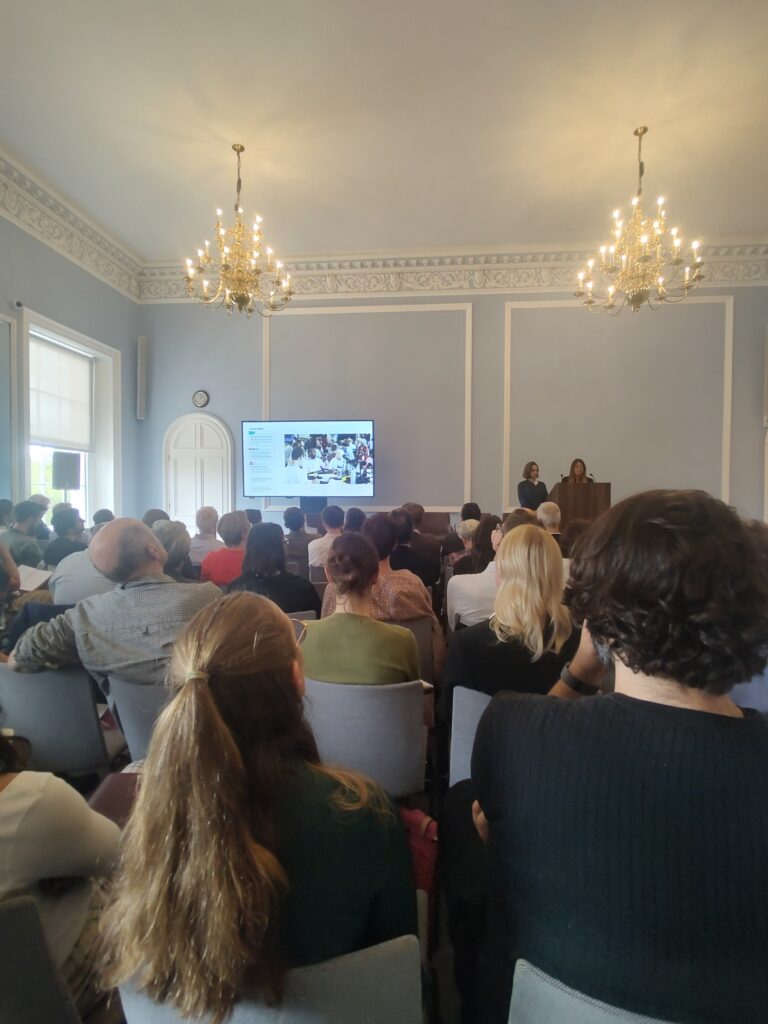

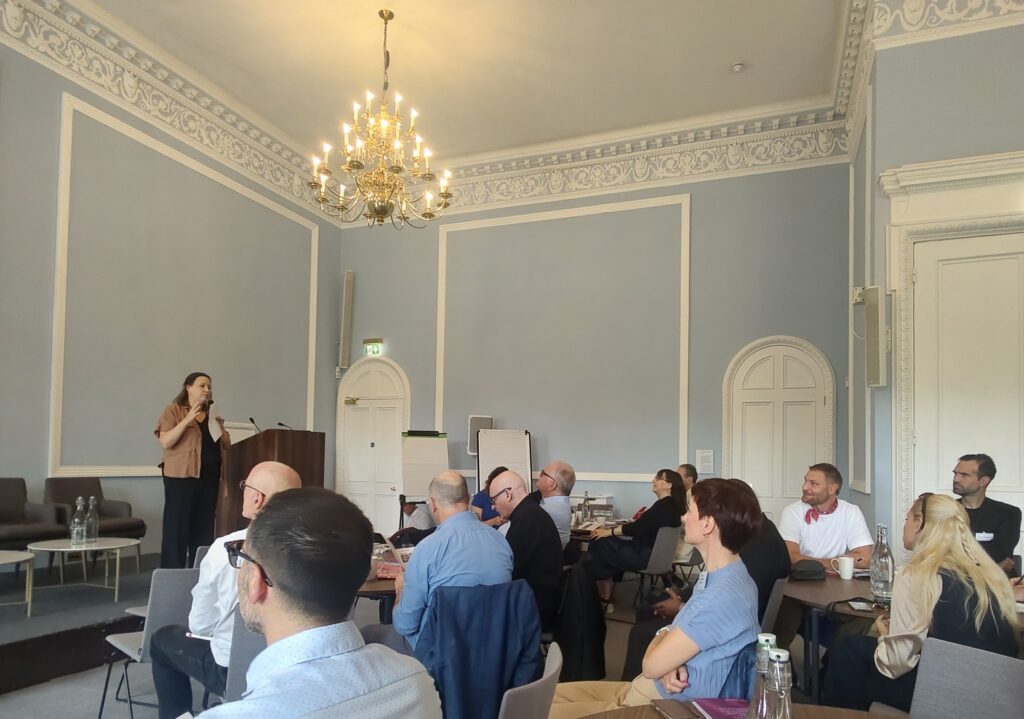
On 3–4 September 2026, the British Academy in London hosted the conference Towards Public Digital Infrastructures, which addressed some of the key challenges facing public service media (PSM) in the platform era, particularly the growing influence of big technology companies over media ecosystems and infrastructures.
The invite-only conference brought together leading academics, policymakers and PSM professionals. Through keynote speeches, panels, and roundtable discussions, participants explored public-interest-oriented technologies and platforms, AI and algorithms, and social media. Discussions considered which technologies were feasible, how they could benefit the creative industries, and what opportunities and challenges existed for international collaboration.
The RePIM Coordinator and two PhD supervisors from the RePIM Doctoral Network contributed to the conference, which was also attended by DC7 researcher Nanoek Bos. Tim Raats, Associate Professor at Vrije Universiteit Brussel and Head of the Media Economics and Policy Unit at imec-SMIT presented VRT MAX’s curation and personalisation strategies and discussed the potential of taste-broadening algorithms. Karen Donders, VRT Director of Public Value, Talent and Organisation and Professor at Vrije Universiteit Brussel, encouraged PSM organisations to be courageous in their strategic decisions and to place discussions about collaboration more centrally within their organisations. Petr Szczepanik, Associate Professor at Charles University in Prague, demonstrated how platforms had amplified geographical inequalities between Central-Eastern and Western Europe.
Innovation featured prominently throughout the conference. Participants presented examples including interactive news tools developed by Sveriges Radio, AI-powered translation, captioning and real-time transcription at the BBC, and platforms designed to improve the quality of online conversation by the New_Public studio.
Collaboration was another recurring theme. ZDF has been working with six other PSM organisations to expand their internet platforms, while VRT has been exploring scenarios for platform collaboration with private media, creative industries, and fellow broadcasters. In the UK, the Freely platform has already boosted PSM viewership by improving discoverability and prominence.
At the same time, participants highlighted significant barriers to collaboration and innovation. A study by the Centre for Media Pluralism and Media Freedom found that a European news streaming platform was technically feasible but legally complex, while some organisations raised concerns about dependencies on software developed by other PSM. A representative from Australian broadcaster ABC pointed to another challenge: PSM organisations operated under different national remits and served distinct local audiences, which complicated international cooperation.
Smaller broadcasters faced additional pressures. LRT reported that constant strategic shifts had contributed to newsroom burnout and stressed the importance of strengthening organisational resilience in a media environment characterised by continued dependencies on large technology companies.
The Responsible Innovation Centre for Public Media Futures also presented their recently published report based on the results of a UK public deliberation on the impact of technology on PSM. According to their results, audiences want a better online environment and think PSM should be key players in this endeavour, by countering disinformation and the negative impact of social media, as well as supporting the development of digital skills.
Against this backdrop, Baroness Beeban Kidron of the House of Lords urged the PSM community to make its voice heard among parliamentarians. She argued that the growing policy focus on defence and resilience had created an important opportunity for PSM organisations to reinforce their societal role.
The conference closely reflected many of the questions at the heart of the RePIM Doctoral Network, including platform dependency, collaboration, innovation and the future role of public service and public interest media. RePIM aims to strengthen research, collaboration and innovation around these challenges and welcomes opportunities to contribute to similar exchanges in the future.