
What assumptions about Public Interest Media do we take for granted today, and which of them may no longer hold in five or ten years?
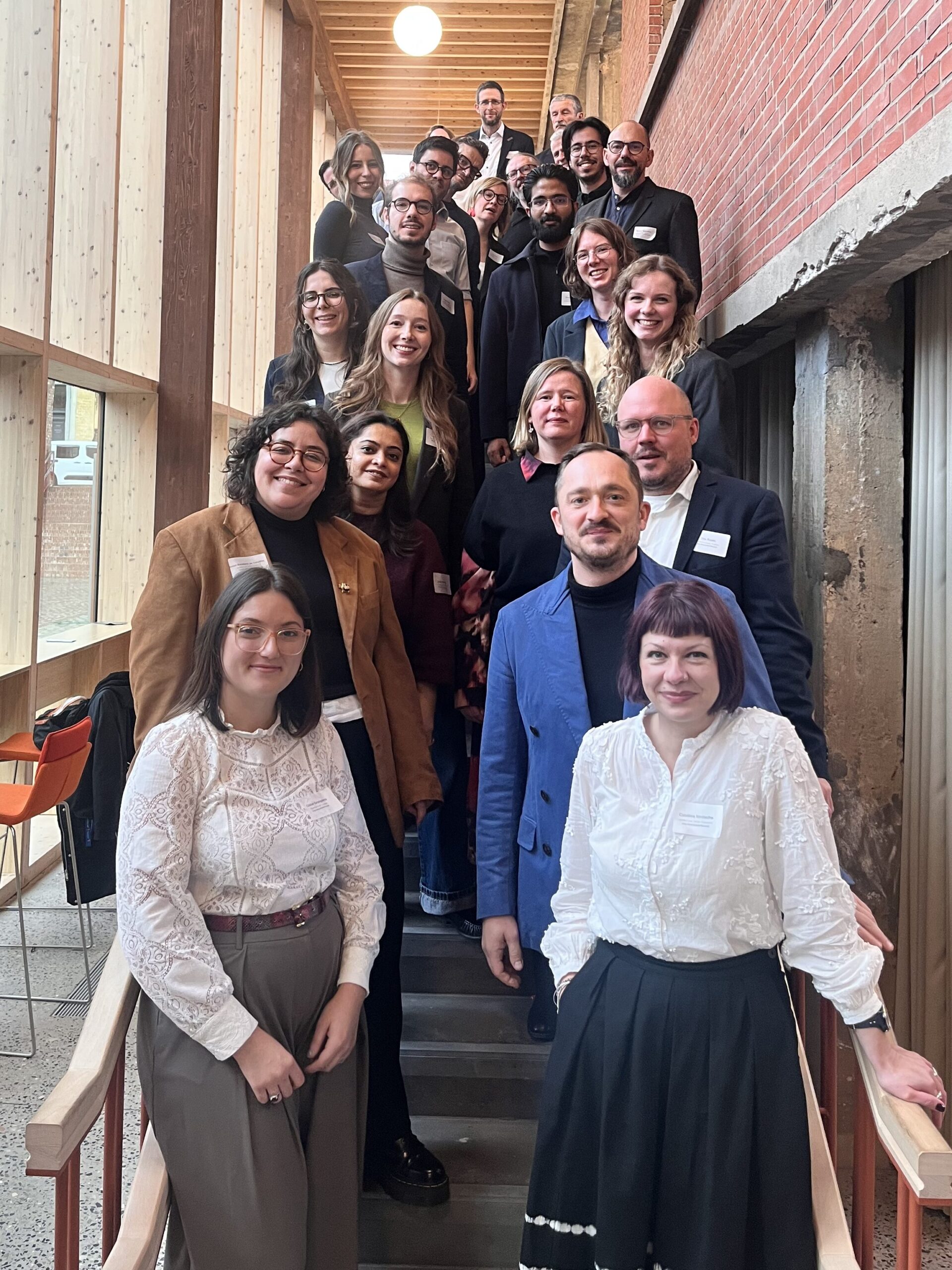
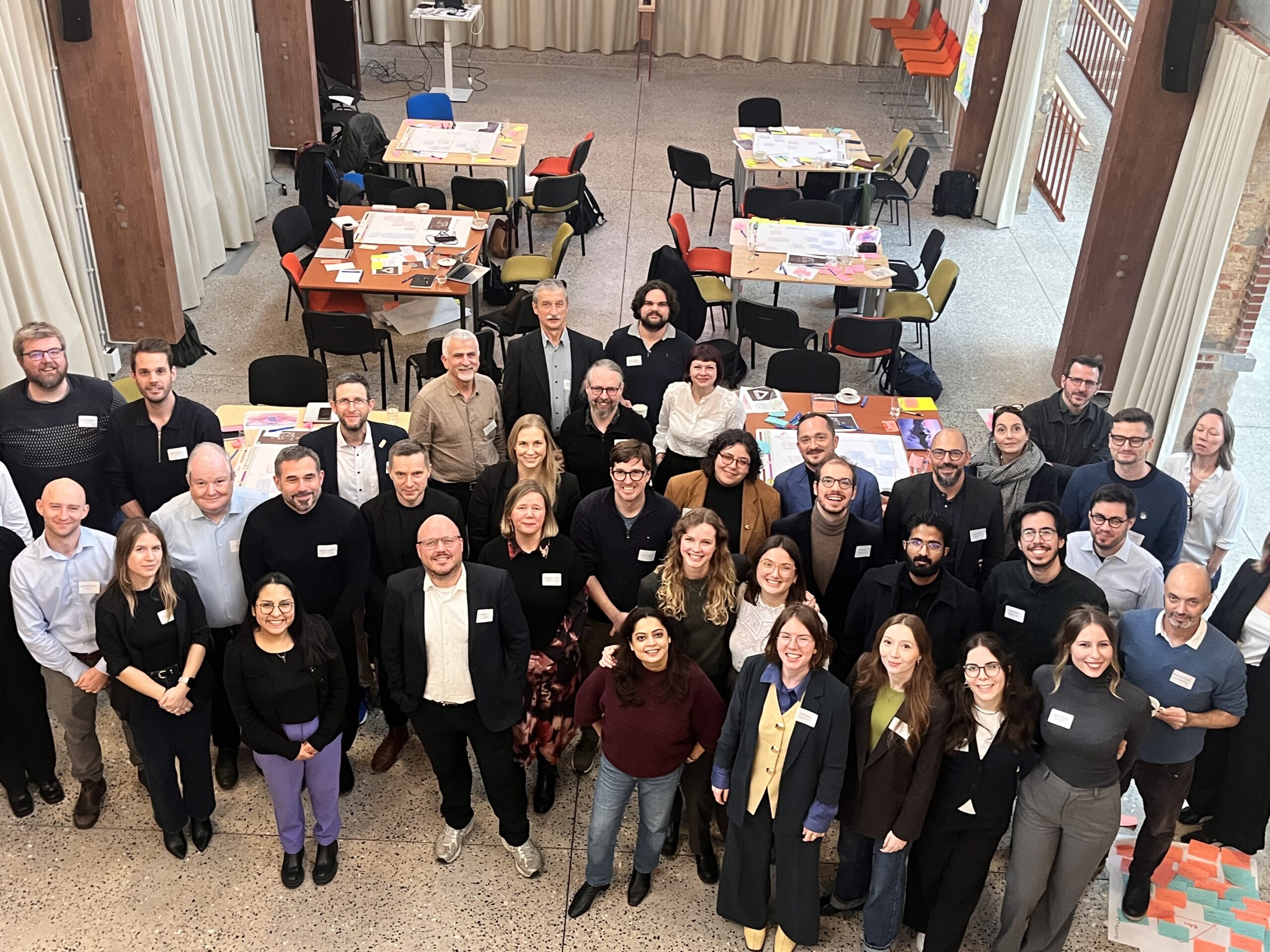
This question was at the centre of the first RePIM Industry Day, held at VUB USquare in Brussels on 19 November 2026. Bringing together around 45 participants from the RePIM network and the wider media ecosystem, the event created a space to look beyond immediate challenges and consider some of the forces that could reshape Public Interest Media (PIM) in the years ahead.
The Industry Day formed part of RePIM’s first network-wide training module and was designed primarily as a learning and exchange opportunity for its 12 Doctoral Candidates. At the same time, it brought their emerging research into conversation with the experience of media organisations, regulators, civil-society actors and researchers working on many of the same transformations.
Participants included Associated Partners, members of the Advisory Board and representatives from organisations such as EBU, ERR, Czech Television, NPO, Ofcom, Journalismfund Europe, Public Media Alliance, RTBF, Mediawijs, the International Association of Public Media Researchers (IAPMR) and the Flemish Sectoral Council for Media, alongside researchers and supervisors from across the RePIM consortium. The day was facilitated by the Copenhagen Institute for Futures Studies (CIFS).
Starting from assumptions rather than predictions
Ahead of the event, participants were invited to identify assumptions about the future of Public Interest Media that they considered important to question or test.
An assumption, in this context, was something currently taken for granted as true or likely to continue — and which consequently influences how media organisations, policymakers and researchers make decisions. Participants were encouraged to consider what audiences, citizens or media organisations currently assume about PIM that might no longer be true several years from now. These contributions provided a starting point for the day’s futures work.
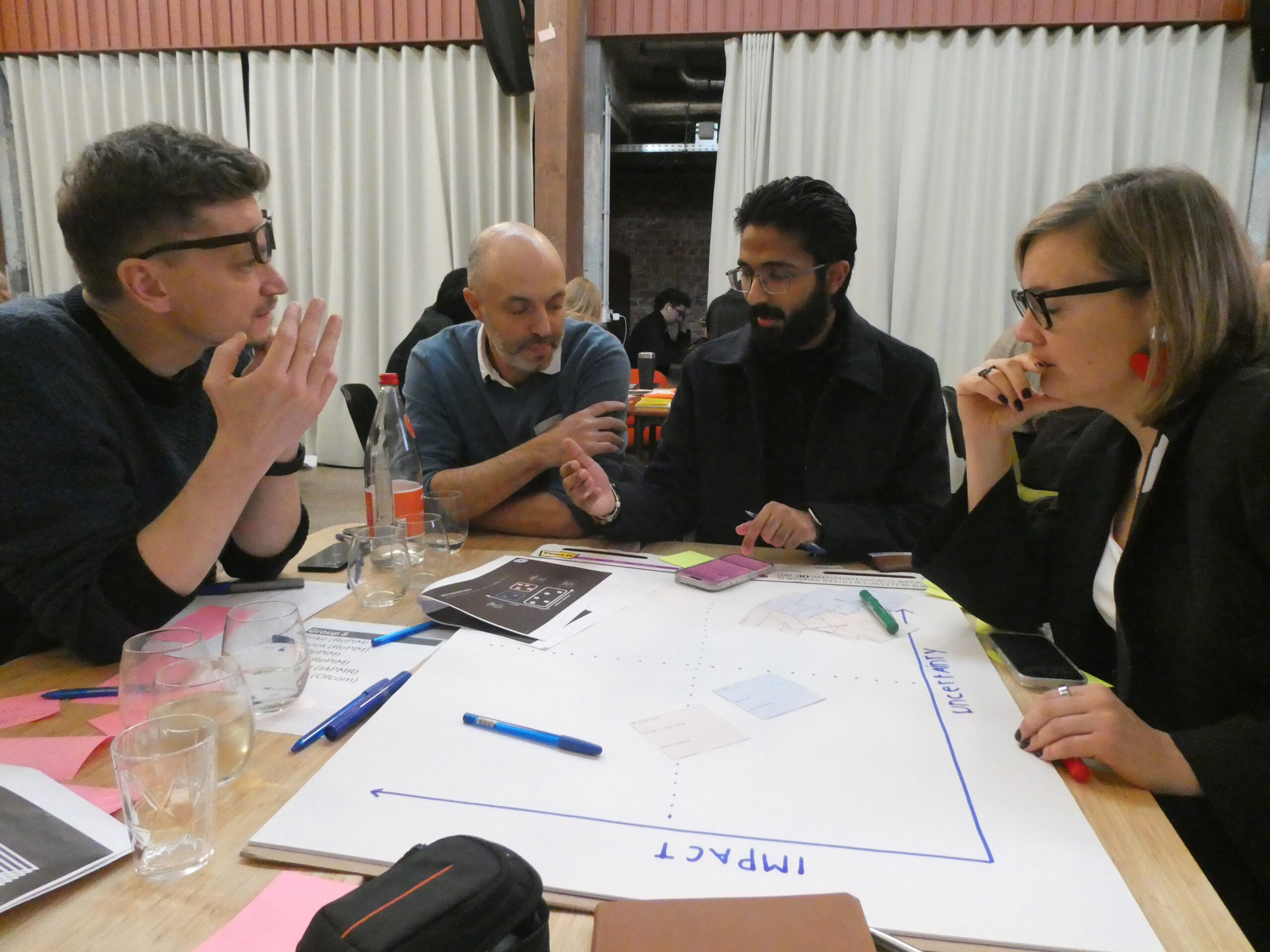
Following an introduction to foresight and some of the forces reshaping PIM, participants worked in mixed groups combining RePIM Doctoral Candidates, supervisors and external stakeholders. The aim was deliberately not to produce polished future scenarios in a single day. Instead, the exercise sought to establish a common baseline: which assumptions currently shape thinking about PIM, what developments might disrupt them, and where the most important uncertainties lie.
From assumptions to trends and uncertainties
During the morning, the groups compared and challenged their initial assumptions and were introduced to broader developments affecting the future media landscape.
The afternoon moved from these starting assumptions towards a wider exploration of the future of PIM. Participants examined developments across technological, organisational, economic, regulatory and societal dimensions and considered how different changes might interact.
The groups then worked to translate their findings into trends and critical uncertainties. These were presented in plenary before participants returned to their original assumptions and asked a final question: after a day of collective exploration, which assumptions still seemed robust, and which had become much less certain?
This process was particularly valuable because of the diversity of perspectives around the tables. Questions about technologies and distribution could be considered alongside organisational realities; regulatory perspectives could be discussed alongside audience and content questions; and the emerging research of the RePIM DCs could be tested against the experience of practitioners working directly in the sector.
A longer RePIM futures track
The Brussels Industry Day was not conceived as a stand-alone scenario exercise. It represents the first stage of a longer foresight and scenario-building process within RePIM.
The assumptions, trends and uncertainties identified in Brussels provide material that the network can revisit as both the media environment and the 12 doctoral projects develop. Subsequent RePIM training and Industry Day activities will build on this work, allowing the consortium and its partners to compare how expectations have changed and progressively develop richer perspectives on possible futures for Public Interest Media.
This longitudinal approach is important to RePIM’s wider ambition. Rather than treating the future of PIM as something that can be forecast once, the project uses foresight as a way of continually challenging assumptions, bringing research and practice into dialogue, and asking how public-interest objectives might be sustained under changing conditions.
The Industry Day concluded by looking ahead to the next stage of this process in 2027, before discussions continued informally over an evening networking dinner in central Brussels.
For RePIM’s Doctoral Candidates, the day also offered something more immediate: an opportunity to discuss their emerging areas of research with people working across the public media ecosystem and to see how questions addressed within individual PhD projects connect to broader choices facing the sector.